
News
Apple’s foldable iPhone is stuck, can anyone build a reliable foldable at scale?
Disruption snapshot
Foldable phones are delayed by hinge durability and OLED yield limits. Mass production consistency, not design, is now the main constraint for premium launches.
Winners: Samsung and display suppliers with scale and process know-how. Losers: late entrants and smaller OEMs that lack yield efficiency and face higher costs and warranty risk.
Watch supplier signals like higher OLED yields and tougher hinges. Also track large-volume launches without rising defect rates or returns across multiple brands.
Apple (AAPL) has a Disruption Score of 2.
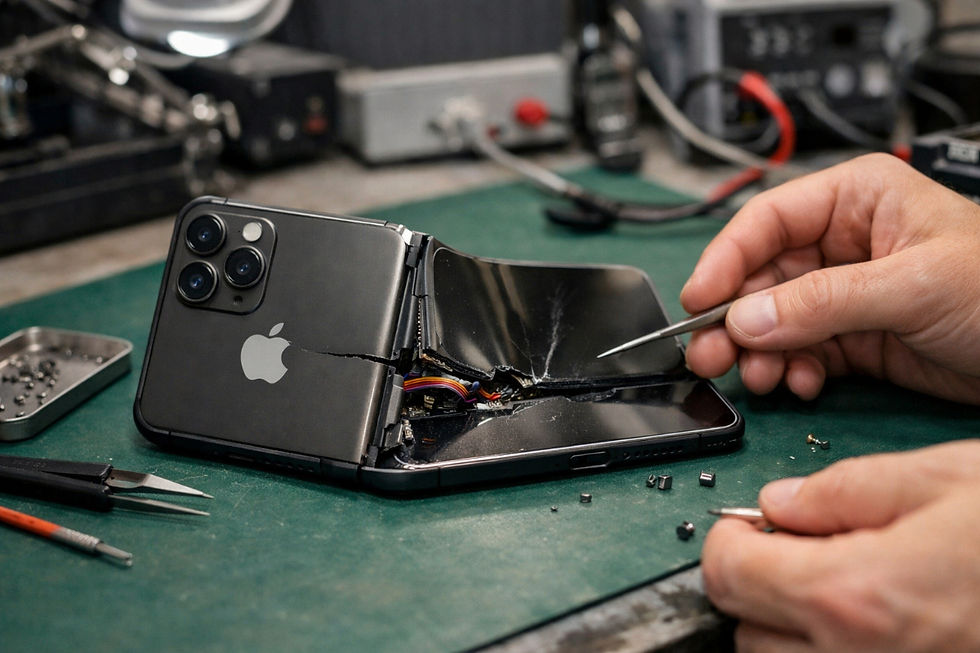
Apple’s (AAPL) foldable iPhone remains delayed, and the reported reasons matter. This is less about demand or imagination than about two stubborn manufacturing problems: hinge durability and foldable OLED yield. Those issues have reportedly pushed back mass production even after years of work inside one of the world’s most disciplined hardware companies.
That makes this more than another “iPhone Fold coming in 2026” story. It points to a harsher reality for the entire foldables market. The limiting factor is no longer whether companies can design a phone that folds, or even whether consumers find the form factor appealing. The harder challenge is building a foldable phone in huge volumes with the consistency, durability, and margins of a conventional flagship.
Apple’s delay sharpens that point. If the highest-volume premium smartphone company still cannot bring a foldable to market on its own quality terms, the category’s biggest problem is sitting on the factory floor. In foldables, manufacturing execution is starting to matter more than concept.
That also raises a bigger question about whether the iPhone Fold can revive Apple’s innovation slump. If Apple does enter the category, it will not be enough to launch something visually striking. It will need to prove that foldables can meet the same reliability and polish consumers expect from a mainstream flagship.
Why hinge and display yields now dictate the foldable playbook
The reported holdup comes down to parts that are difficult to perfect and expensive to get wrong. A foldable hinge has to open and close hundreds of thousands of times without loosening, grinding, or letting in particles that can damage the display. The screen itself has to bend repeatedly while staying bright, responsive, and visually clean. At scale, even small defects can wreck yields, drive up cost, and create warranty risk.
That is especially important for Apple. The company’s brand depends on predictable quality, low return rates, and products that behave the same from one unit to the next. A foldable that creases too much, wears unevenly, or fails early would create a problem that marketing cannot solve.
Samsung’s track record shows how punishing that learning curve can be. Since launching the original Galaxy Fold in 2019, Samsung has spent years refining hinges, display protection, and assembly tolerances. Early models ran into highly public problems, including screen failures and durability concerns serious enough to force a delayed launch. Samsung kept going anyway. Over multiple generations, it improved hinge designs, reduced gaps, strengthened ultra-thin glass approaches, and built real-world data from millions of shipped devices.
That experience is now extending beyond standard book-style devices, with Samsung releasing its first tri-fold smartphone as the foldables race continues. The point is not just product novelty. It is that Samsung has kept iterating in public while competitors are still wrestling with the realities of scale.
Samsung Display also remains the dominant force in flexible OLED supply, giving the company a major advantage in process knowledge and component access.
That experience matters because foldables do not improve through a single breakthrough. They improve through repetition: better materials, tighter tolerances, cleaner assembly, better sealing, and fewer failures in the field. Each percentage point of yield improvement has a commercial effect. It lowers scrap, improves margins, and makes broader distribution more realistic.
Other players help prove the same point. Google’s Pixel Fold and OnePlus Open showed that foldables can be polished and compelling, but neither company is operating anywhere near Apple or Samsung volume. Oppo and Huawei have also shipped advanced foldables, yet the broader market still has not produced a clear sign that multiple companies can mass-produce them globally with mainstream-phone reliability and economics. The technology exists. The industrial base is still catching up.
That is why Apple’s delay reads as a sector-wide signal. The company is famous for waiting until a category can meet its standards at scale. If hinge reliability and foldable display yields are still holding up a launch, then the bottleneck is real. The advantage belongs to companies that have already spent years absorbing the pain of manufacturing iteration.
What to watch next
Three things will tell you whether this bottleneck is easing.
First, watch suppliers. Any credible sign of a hinge redesign, higher-endurance testing, or materially improved foldable OLED yields would matter more than glossy concept demos. Long-term supply agreements, factory expansion tied to foldable panels, and teardown evidence of meaningful structural changes would all be concrete signals.
Second, watch Samsung’s execution. If Samsung continues shipping foldables in meaningful volume while keeping reliability complaints manageable, it strengthens the case that manufacturing depth is the decisive moat here. Its partnership between Samsung Electronics and Samsung Display remains one of the strongest real-world proof points in the category because it combines product iteration with supply-chain control.
Third, watch whether anyone outside Samsung’s orbit scales successfully. If Google, Oppo, or another player starts pushing foldables globally without a wave of warranty issues or visible quality compromises, that would suggest the chokepoint is starting to loosen. If expansion stays cautious and volumes remain limited, the opposite conclusion gets stronger.
For now, the thesis is straightforward. Foldables are no longer held back mainly by imagination. They are held back by the hard, expensive work of making advanced parts reliable in mass production. Apple’s delay does not prove foldables will stay niche forever.
But if Apple eventually moves ahead with plans to ship millions of $2,000 foldable iPhones, that would mark a major shift in the category’s economics. It would suggest the company believes the manufacturing bottlenecks are easing enough to support not just a launch, but meaningful scale.
Apple (AAPL) has a Disruption Score of 2.
Recommended Articles
