
Analysis
How disruptive is OpenClaw?
Disruption snapshot
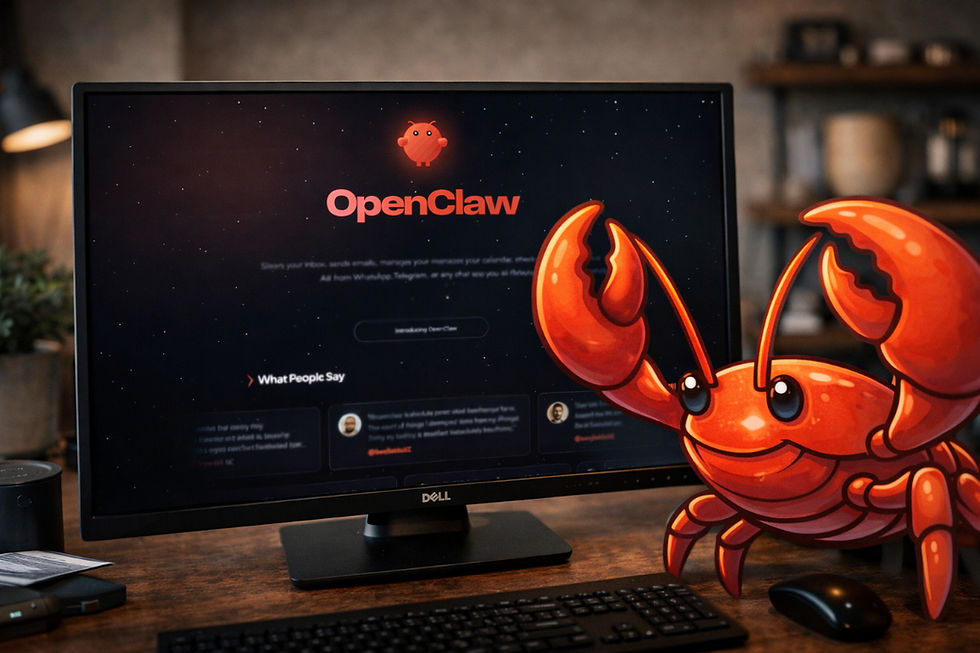
OpenClaw shifts AI from chat suggestions to real actions. It runs inside chat apps you already use and can be self-hosted. That cuts reliance on SaaS assistants.
Winners: Open-source developers and self-hosted infrastructure providers. Losers: SaaS assistant vendors, RPA platforms, and app makers that rely on owning the interface.
Watch enterprise adoption of self-hosted agents and any major platform bans or API limits. Also track reported incidents tied to autonomous actions like unintended deletions.
OpenClaw is disruptive in the way Linux was disruptive, not in the way a shiny new app is disruptive.
It’s not “another assistant.”
It’s a control layer that turns chat into a command line for your life, and it runs on infrastructure you own.
That combo changes who gets to build agents, who gets the data, and who captures the value.
Why it’s genuinely disruptive
1) It flips distribution from apps to channels.
OpenClaw meets you inside WhatsApp, Telegram, Slack, Teams, Signal, iMessage, and more. That matters because the “UI” becomes whatever chat thread you’re already in, not a new product you have to adopt.
2) It pushes agents from “suggesting” to “doing.”
The marketing is blunt: clear inboxes, send emails, manage calendars, check you in for flights. That’s not copiloting, but delegation.
3) It makes “self-hosted agents” a default, not a hobby.
The pitch is “your machine, your rules” and running on your laptop, homelab, or VPS. If this sticks, the center of gravity moves away from SaaS assistants that require your data to sit on someone else’s servers. Can SaaS stocks survive AI?
4) It’s open source, which means it can become a standard.
OpenClaw is MIT-licensed and already has a big open community footprint on GitHub. Open standards are how ecosystems form, and ecosystems are how moats get built.
The disruption comes with a sharp edge.
OpenClaw’s biggest strength is also its biggest risk: it can be wired into “wide portions” of your system and act with too much autonomy if you configure it that way.
The recent viral incident where it started deleting emails after losing a “confirm before acting” instruction during prompt compaction is the nightmare scenario: high agency plus brittle guardrails.
That’s why you’re seeing platform pushback.
Google reportedly restricted users routing tokens via OpenClaw on its AI coding tool because of “malicious usage” and service degradation concerns. When infrastructure providers start banning a tool, that’s a sign it’s not just a toy, it’s load-bearing. Most people don’t realize how much better AI got in the last year.
And the creator joining OpenAI while moving the project toward a foundation model hints at where this is heading: OpenClaw (or something like it) becoming part of the mainstream agent stack, not a side quest.
So, how disruptive is it, really?
High potential disruption, uneven near-term reality.
OpenClaw is most disruptive as a pattern: persistent, self-hosted agents that live in chat and execute across your digital surface area.
That pattern threatens three incumbents at once:
1) RPA and workflow automation (because “talk to the agent” beats building brittle automations)
2) SaaS assistants (because self-hosting changes data control and pricing power)
3) The app layer (because the channel becomes the interface, and agents hop across apps for you)
But disruption only becomes durable when trust is boring. Right now, the safety story is loud and messy, and that slows enterprise adoption and normal-person usage. The email-deletion fiasco is exactly the kind of anecdote that spreads faster than any feature list.
My take: OpenClaw is disruptive because it’s forcing the market to standardize around “agents with real permissions.” Even if OpenClaw itself doesn’t win, it’s accelerating the shift. If you’re judging by long-term impact, it’s a big deal. If you’re judging by “should I hand it the keys to my inbox today,” it’s still early.
Recommended Articles
